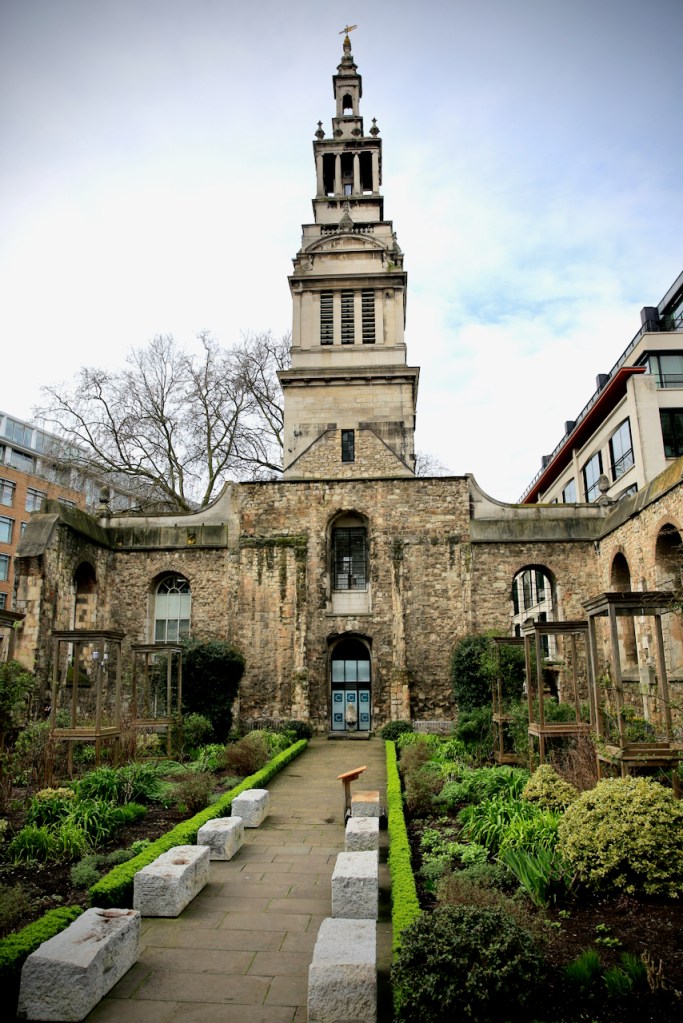
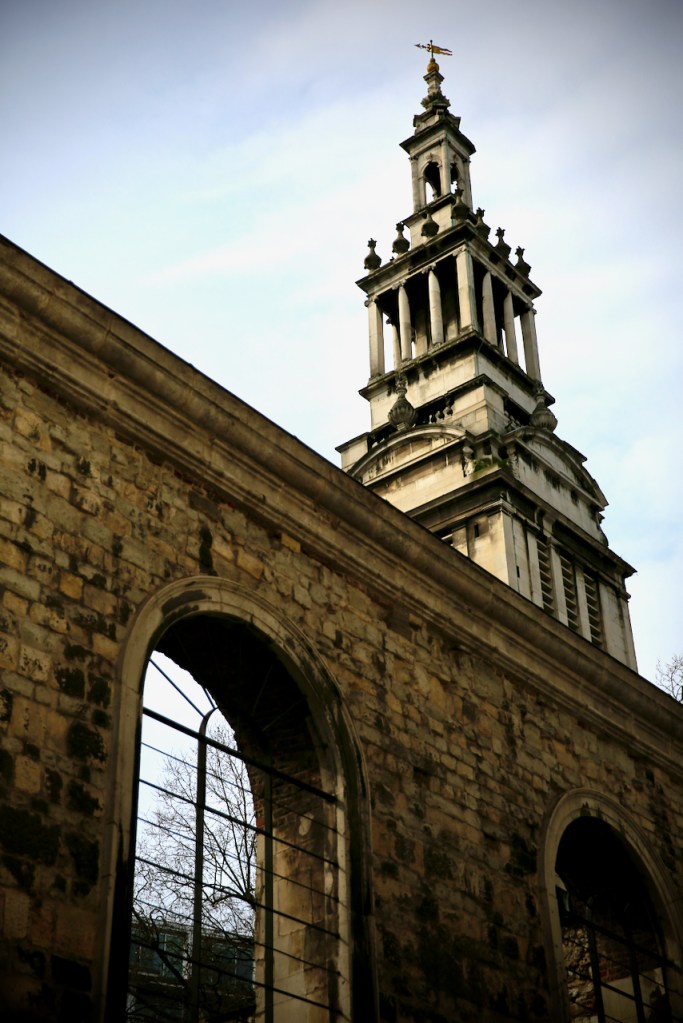
A stones throw from St Paul’s at the busy junction of Newgate Street and King Edward Street are the remains of Christchurch Greyfriars. The church and the surrounding area has a fascinating history. Whilst its distinctive Christopher Wren tower still stands, a 150 feet of classic English Baroque, the rest of the church is a preserved ruin. Enclosed within the remaining walls is now a beautiful garden framed either side by trees, roses and shrubs. There are little wooden towers where the original church columns would have stood, entangled in creepers, they are home to a family of sparrows. It’s a quiet little place amidst all the noise.
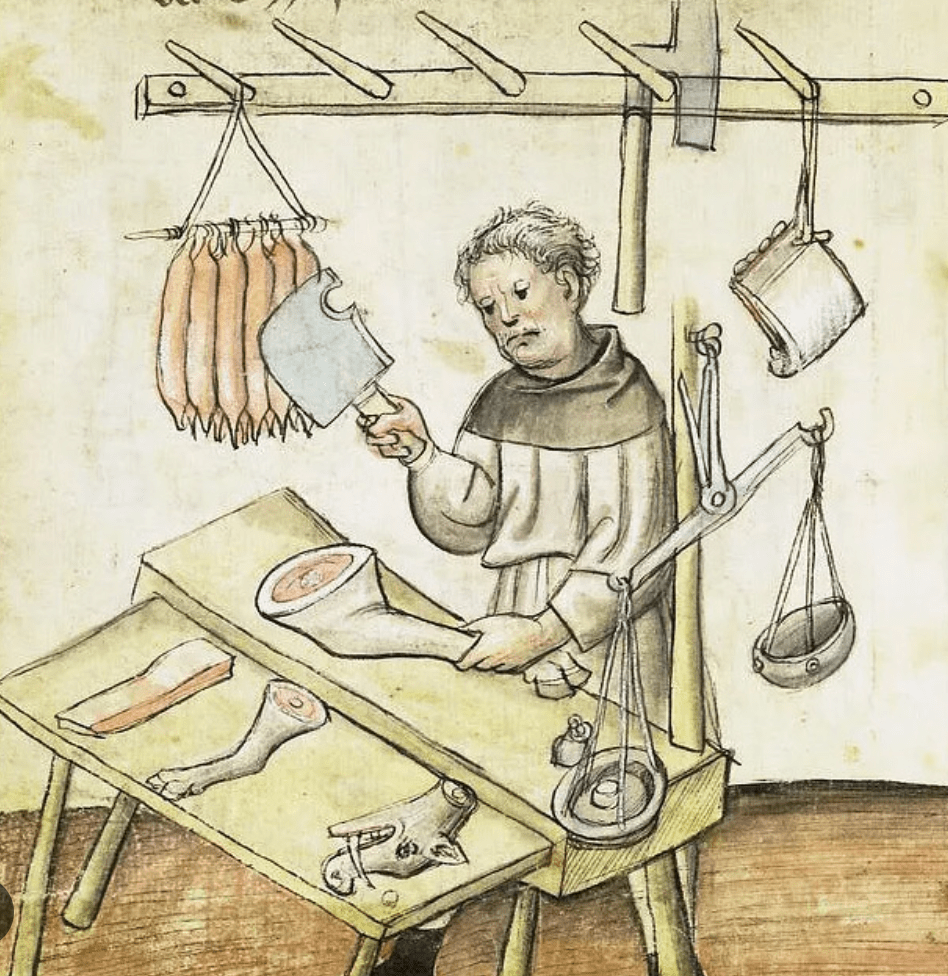
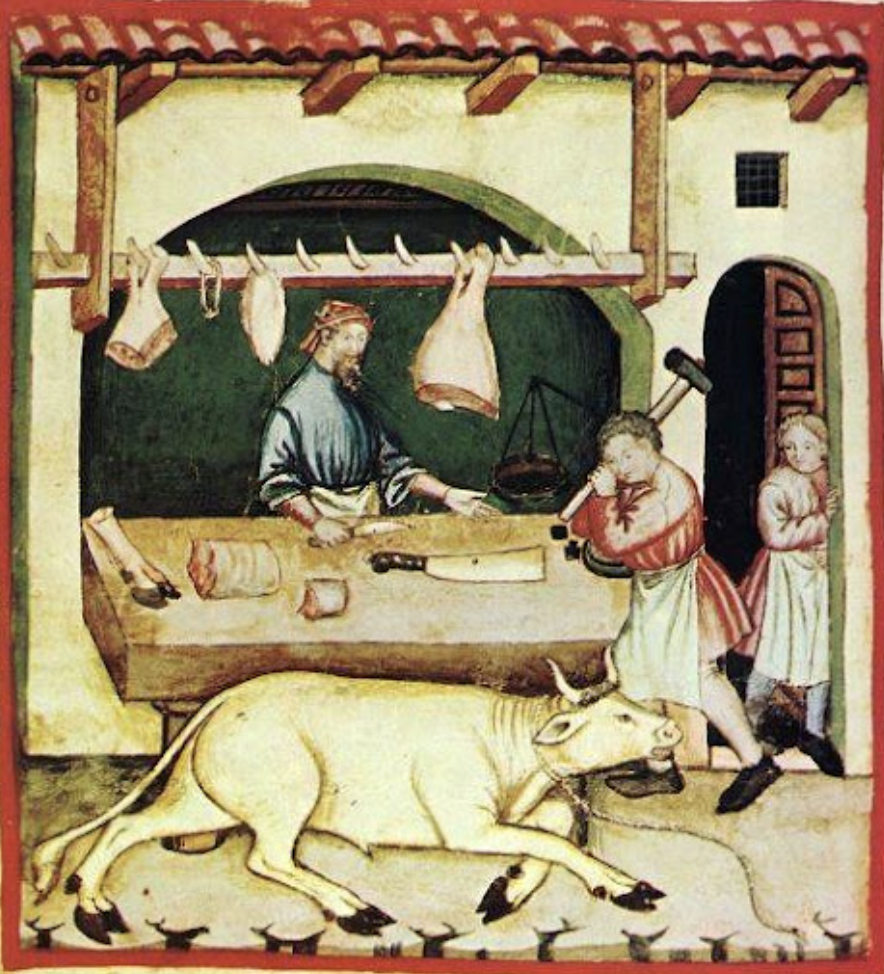
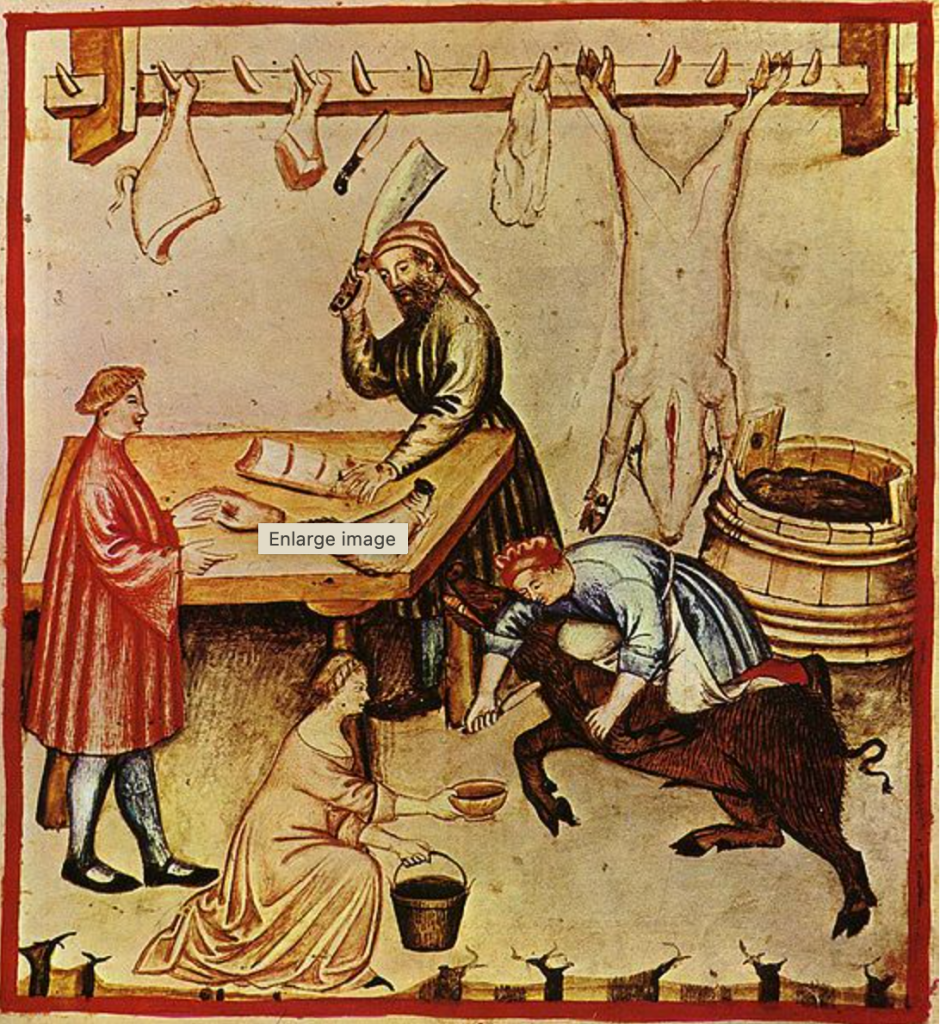
Here originally was the site of a much earlier church, that of St Nicholas in the Shambles, named because of its proximity to the butcher’s quarter, the Shambles, and according to the Agas map, the site of Newgate street market. Not far from here through Newgate lay the great expanse of Smithfield and its livestock market so the Shambles was an area dedicated to meat processing and resale. It was most probably a fairly dirty area filled with waste from the abattoirs and chop shops.
To emphasise this point nearby was recorded a street called Stinking Lane which leaves little to the imagination. There was also Butchers Alley and Foul Lane in close proximity adding to the general sense of what this place must have once been like during the early Medieval period.
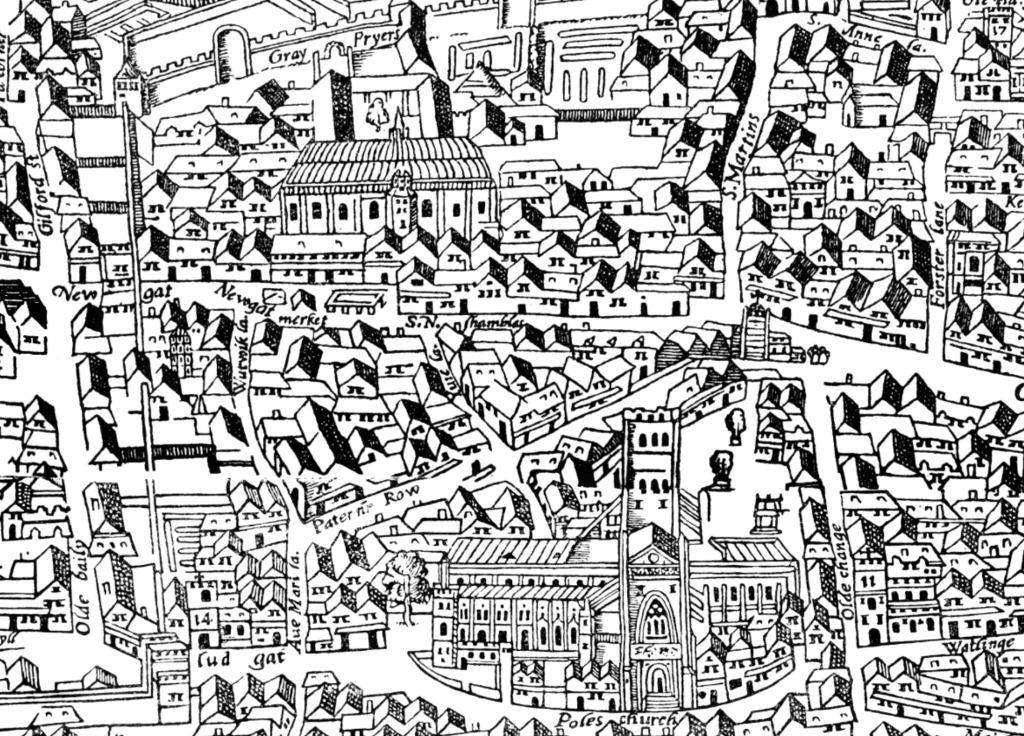
Things clearly improved as by 1225 the Franciscan Church of Greyfriars was established here and grew in time to become a monastery, with a greatly enlarged church, which was said to have eleven altars, elaborate glazed windows, and two chapels. It became a major site of worship in London spanning across the current site and into the park behind the tower, at the time it was the biggest religious building in London after St Paul’s.
It served as a final resting place for some rather unique and significant people. Four queens were buried here: Queen Marguerita of France, the second wife of King Edward I; Queen Isabella wife of King Edward II, who was laid to rest with the heart of her husband; Queen Eleanor of Provence, wife of King Henry III, and Queen Joan de la Tour of Scotland, daughter of King Edward II. Further more there were also four duchesses, four countesses, one duke, two earls, eight barons and thirty-five knights laid to rest here. It was clearly a place of great significance and influence.

Everything changed in 1538 during the Reformation when everything became fair game. The marble tombs were broken up and sold, anything not nailed down was plundered and the church and its buildings were turned into private houses as well as places for storage. In 1546 it was converted into a parish church, and then for a period some of the buildings became a school. It was then destroyed with so many others during the Great Fire of 1666.
Fire now plays a major part in the story.
The new church designed by Christopher Wren was completed in 1687. Wren had an enormously challenging task to carry out, rebuilding St. Paul’s Cathedral as well as 50 parish churches, the process would take nearly a decade to complete. A funny fact, during the monumental rebuild, they built the pubs first, 153 of them. During the following centuries Greyfriars flourished, becoming well known as a centre for music and culture, hosting many concerts and performances, performers such as Felix Mendelssohn and Samuel Wesley played here.
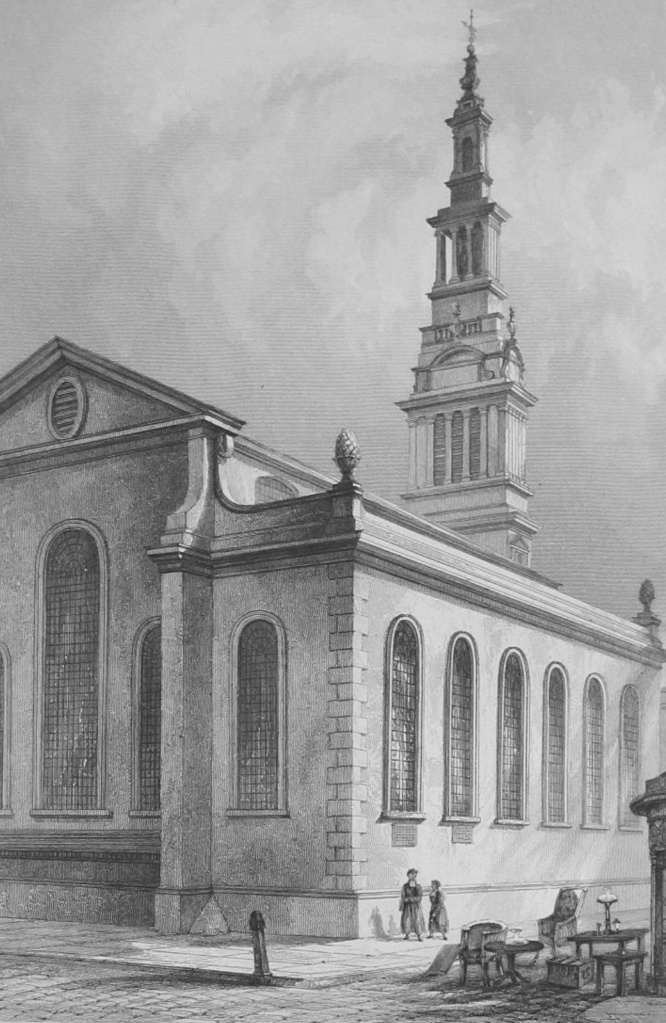
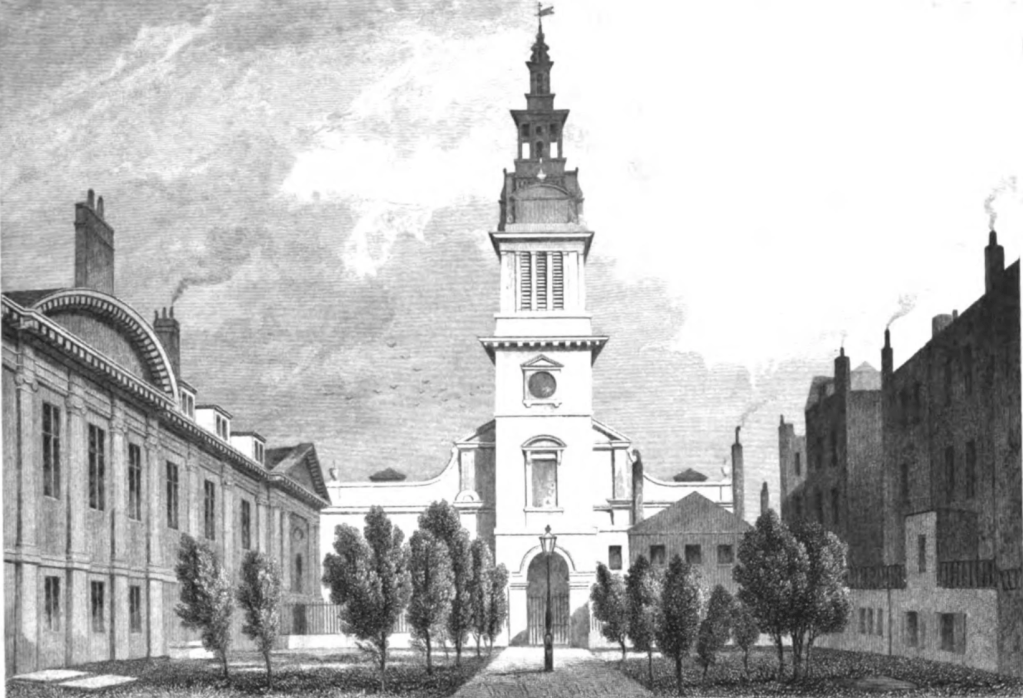
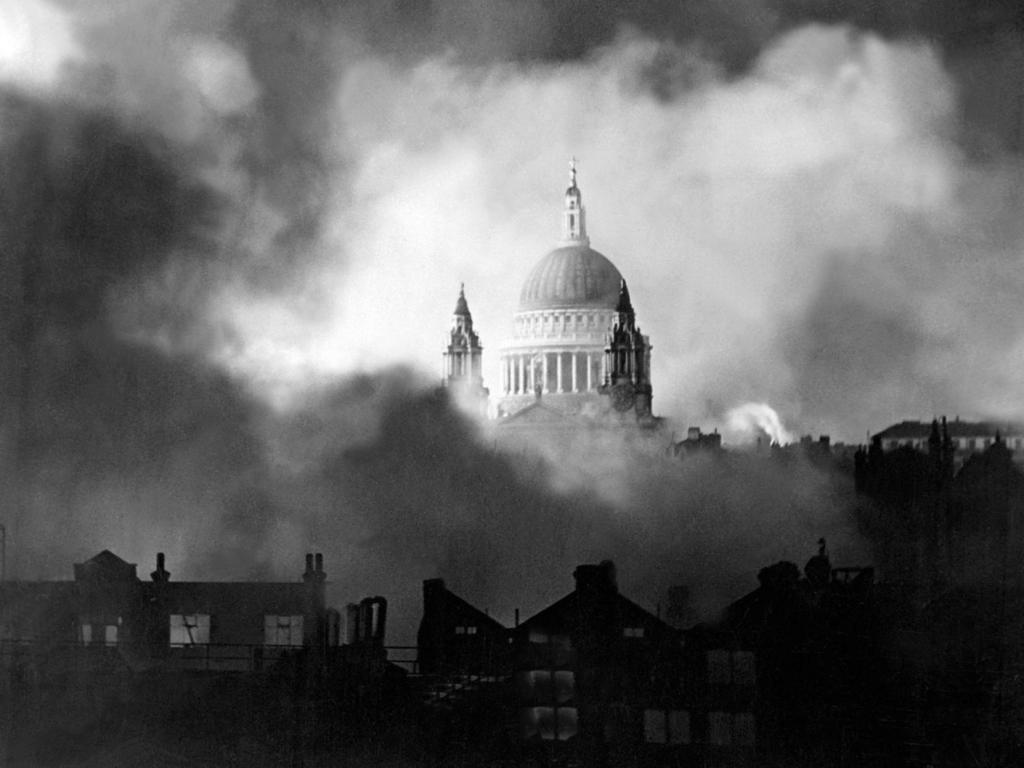
The church remained until the fateful night of 29th December 1940 when one of the heaviest raids of the Blitz, known as the ‘Second Great Fire of London’, destroyed vast swathes of the area surrounding St Paul’s including Christchurch, seven other Wren churches and the Great Hall of the Guildhall. This was the night where the Barbican and Golden Lane Estates were born and the taking of the famous photograph of St Paul’s surrounded by smoke and fire.
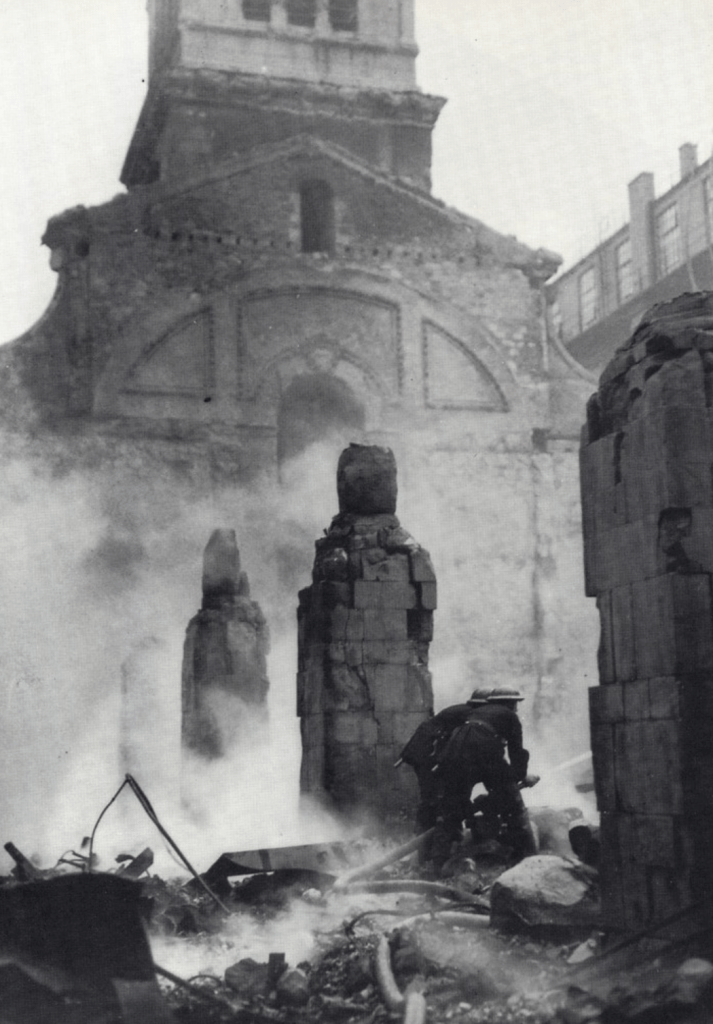
Since the war it has played a role as a quiet green space within the bustle and endless movement of the city. A place where in the summertime the office workers converge for lunch and a spot of sunshine, most not knowing about the history beneath their feet, for here were buried queens and noble people from the times of the High Middle Ages, here Mendelssohn performed, here firefighters fought amongst the crumbling masonry and scorched glass of the Blitz.
The tower was grade I listed back in the 1950s and is a private residence, spanning eight floors, probably one of the most unique properties in London, living in a Christopher Wren tower.
#london #thisislondon #history #londonhistory #imagining #greyfriars #wren #christopherwren #christchurch #baroque #secondworldwar #blitz #tour #walk #londonwalks #guide#explorelondon #visitlondon #seelondon #londres #londra #londoncity #secretlondon #discoverlondon #londonwriter #londonphotography #londonphoto #blackandwhite #travelphoto #londontrip #londonlife #londonforyou


 The London Walker
Leave a comment