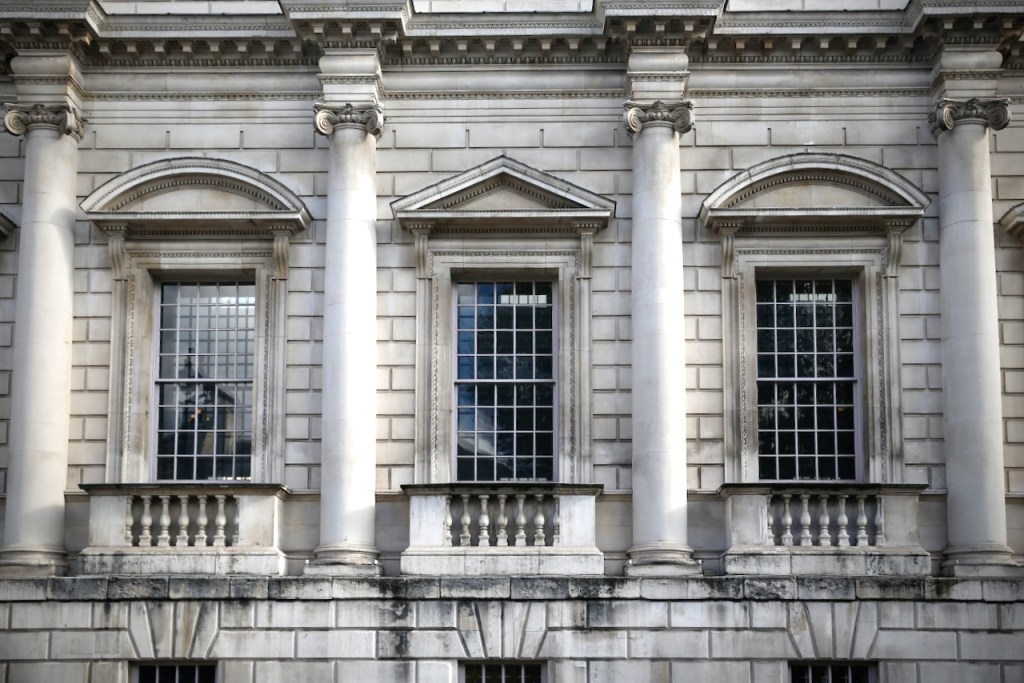
Whilst everyone happily mills about opposite – some amazed, others amused -at the ceremonial guard of troopers and horses outside Horse Guards, directly behind them along Whitehall stands a building with an extraordinary history and story to tell. One that delves into a dark chapter of our past: civil war, regicide – the killing of a king.
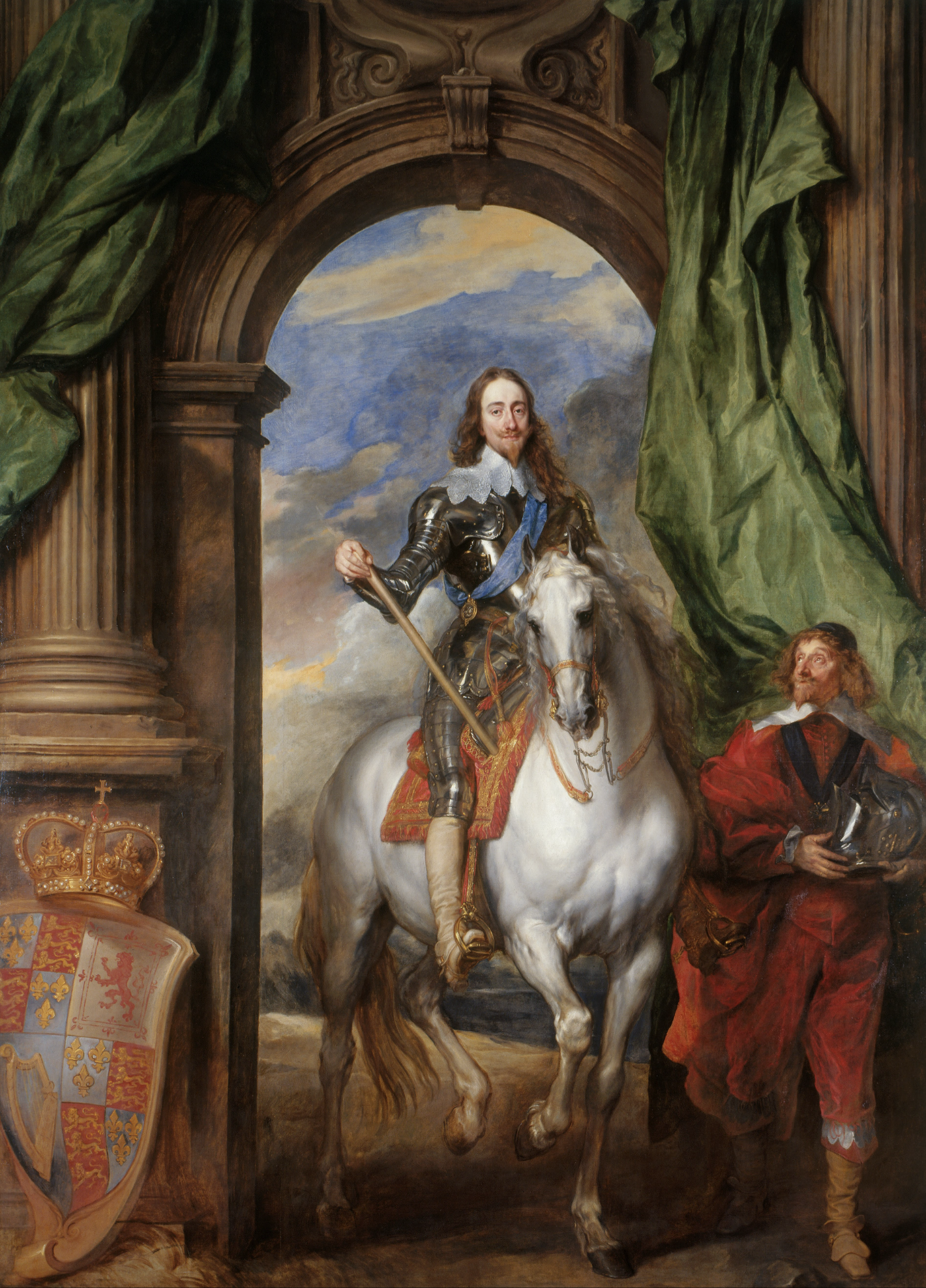
In front of these three windows, 375 years ago to the day, on a chilly afternoon in 1649, King Charles I stepped out onto a scaffold, before a large crowd and was beheaded. It’s a savage piece of our history, and in light of the cheerful crowds of tourists opposite, it seems largely forgotten. As does the history of this very location, for here once stood the great Palace of Whitehall. Today, the only remaining structure is this: Banqueting House.
Banqueting House, was part of what was once the massive Palace of Whitehall. Originally the area was first populated by Saxon monks living an austere lifestyle, in an area known as Thorney Island, separated from the main population of London by the river Tyburn. Over time the population grew, Cnut and other late Saxon period Kings began to live here in palaces, Edward the Confessor famously built Westminster Abbey, which became the place where many of our Kings and Queens have been crowned and buried (not at the same time). Then after the Norman conquest, during the time of Henry II, the beginnings of governance, where politics and monarchy and the church combined in one single area: and thus Westminster as a concept, the heart of English politics, power and the crown became firmly cemented in our psyche. During the early period of the Middle Ages, the old lane which connected London to this growing metropolis became prime real estate for all the lords jostling for royal attention.
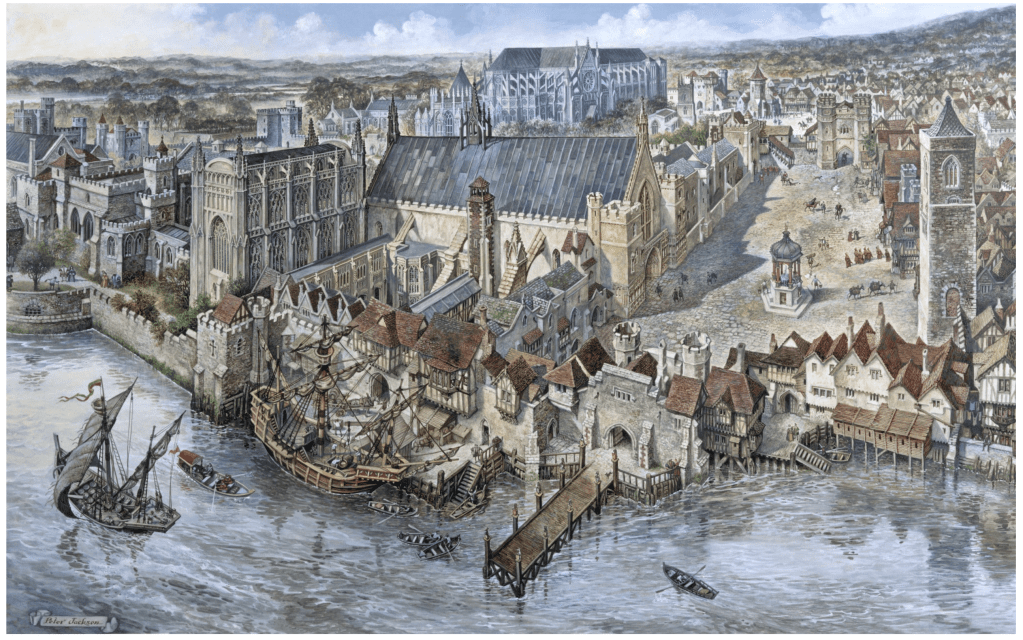
Zooming forwards to the Tudors, and we have an abbey, a royal complex and alongside the road and facing the river a series of rather grand buildings, one of which was York House, which came into the possession of Cardinal Wolsey. Now everything was great for Cardinal Wolsey until he found himself unable to sort out the marital affairs of Henry VIII and Catherine of Aragon. Henry was typically moderate in his way of dealing with the situation, he casually accused Wolsey of treason. Henry, as was his habit, took the place over in 1539, named it Whitehall, and embarked on a massive home improvement programme, turning the Cardinal’s residence into another royal palace, adding extra buildings, tennis courts and a tiltyard, an enclosed area for jousting. It still remains as the open space which we call Horse Guards Parade.
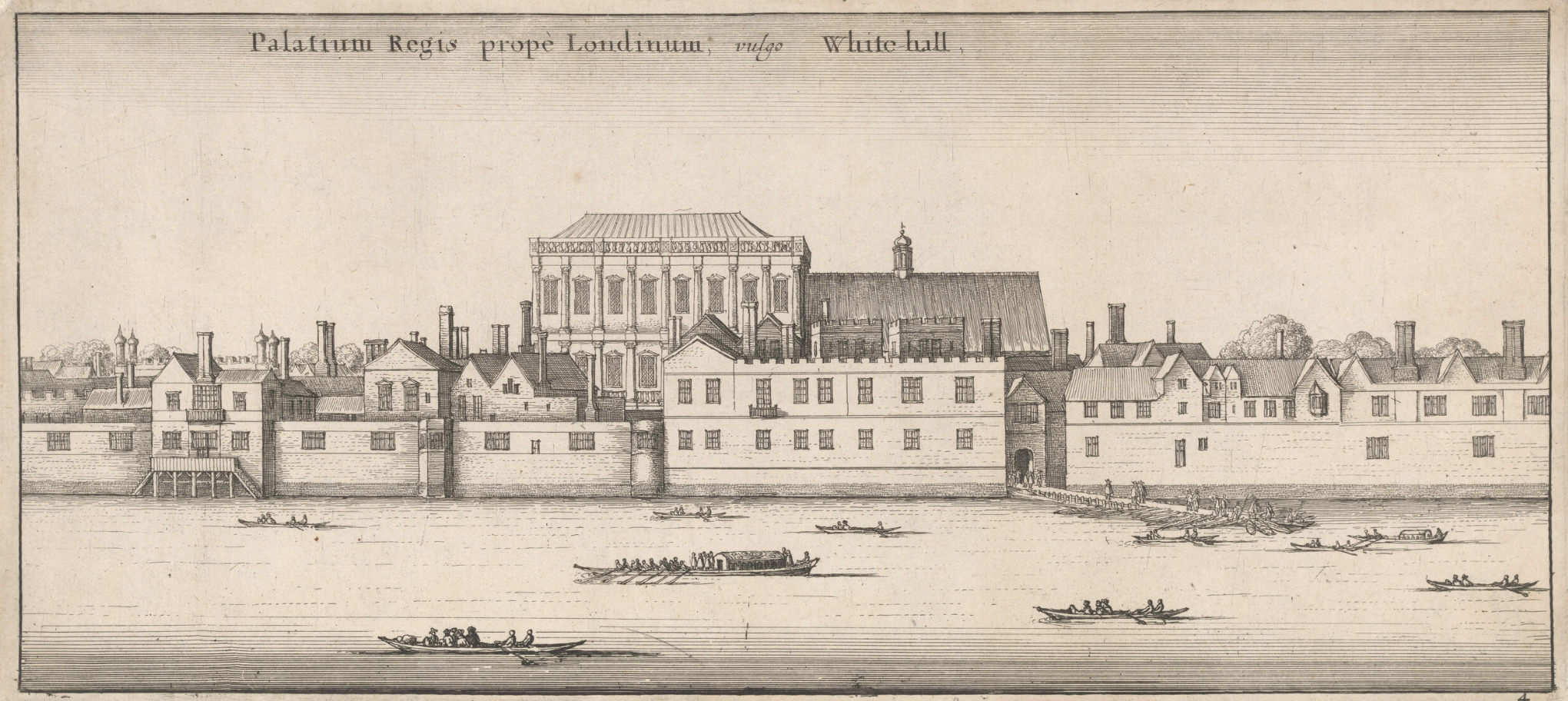
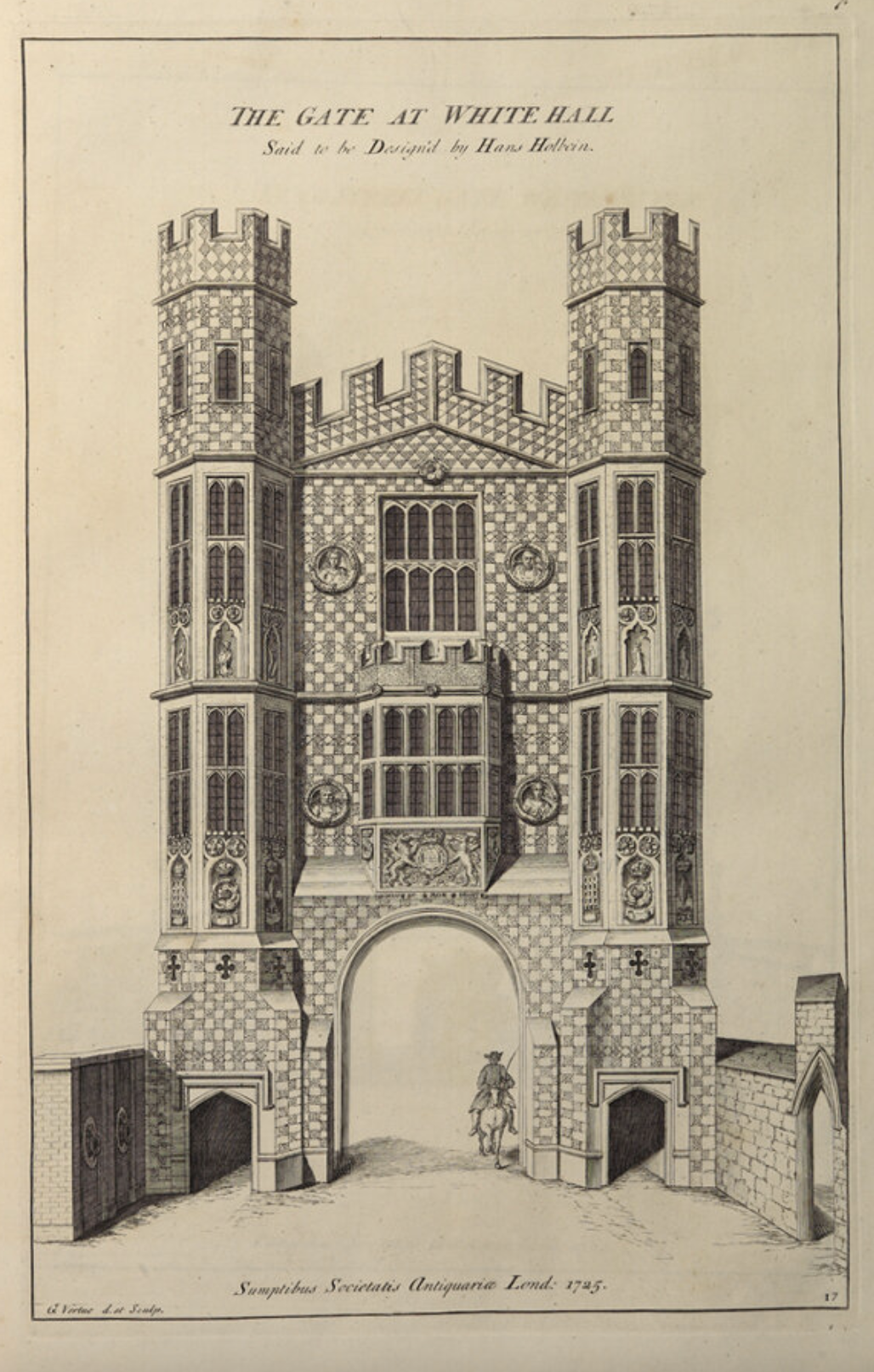
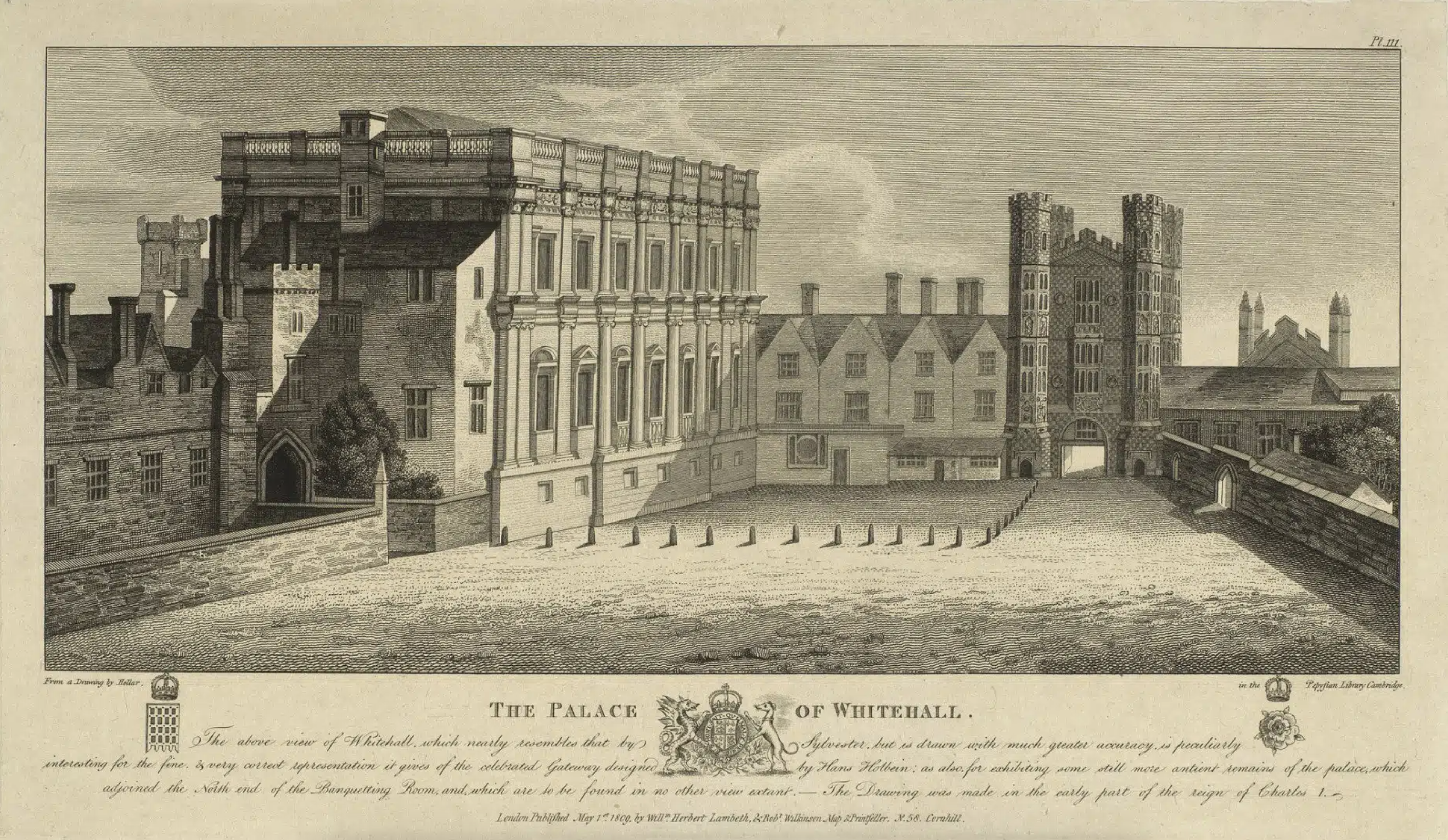
By the time Banqueting House was commissioned, during the reign of James I, the Palace of Whitehall dominated the entire area. Peter Ackroyd describes the setting well in his book Civil War: The History of England III.
‘The palace of Whitehall was a straggling complex of some 1,400 rooms, closets and galleries and chambers huddled together. It was a place of secrets and of clandestine meetings, of staged encounters and sudden quarrels.’
It was built by Inigo Jones in the early 1620’s, I mean he didn’t personally build it, he got some other people to give him a hand. Jones was a big fan of Italian architecture and brought neo-classicism to London. He designed the beautiful Queens House in Greenwich, and arguably created the fashion for piazza-esque residential squares in London with the layout of Covent Garden: a very gifted man indeed. The building of Banqueting House was completed in 1622.
In 1629 Charles I commissioned Peter Paul Rubens to create paintings for the ceiling that celebrated the union of the Scottish and English crowns, the reign of his father James I and the Apotheosis. The King paid £15,000 and a heavy gold chain for the work, which in todays money is quite a good deal, although in Charles’s time it was a small fortune, no doubt helping create a growing sense of unease and discontent in Parliament.
The following Civil War was a brutal conflict between King Charles I and Parliament over power, governance, and religion. The war ended with the execution of Charles I in 1649, the abolition of the monarchy, and England briefly becoming a republic under Oliver Cromwell’s rule. However, after Cromwell’s death, the monarchy was restored in 1660 with Charles II taking the throne. The war ultimately reshaped the balance of power in the country, strengthening Parliament’s handle on things, and limiting the monarchy’s authority.
It didn’t end that well for Cromwell either by the way. When Charles II was restored, which sounds like a complicated procedure; he got Cromwell dug up, had his dead body hanged at Tyburn, and then for a coeur de grâce, beheaded. So in the end it sort of worked out equally for both Charles I and Cromwell. They each lost their heads, only in rather strange ways: one man’s reluctance to accept that he should work alongside people more often, curb his spending and perhaps be a little less divine: and another’s inability to defend his privacy, because he was already dead. They were strange times indeed.
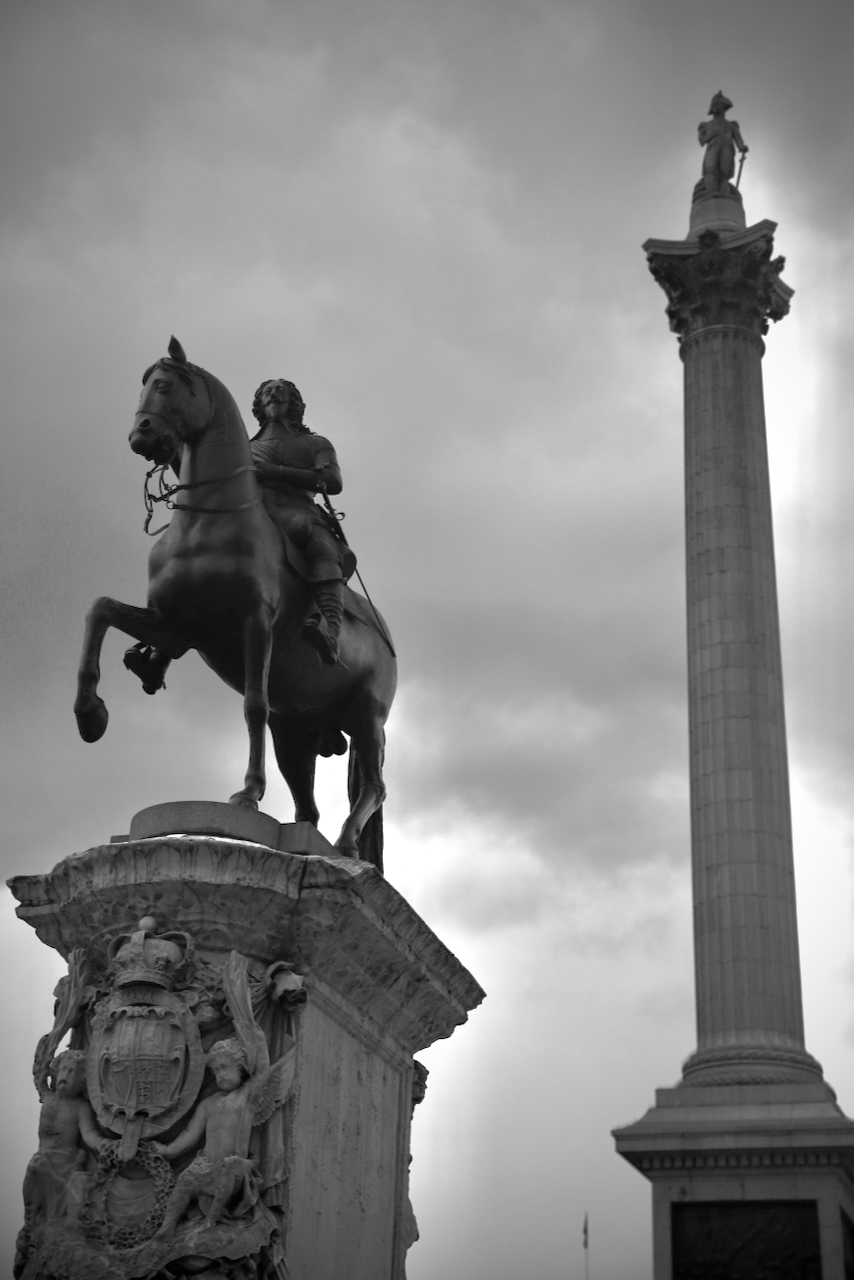
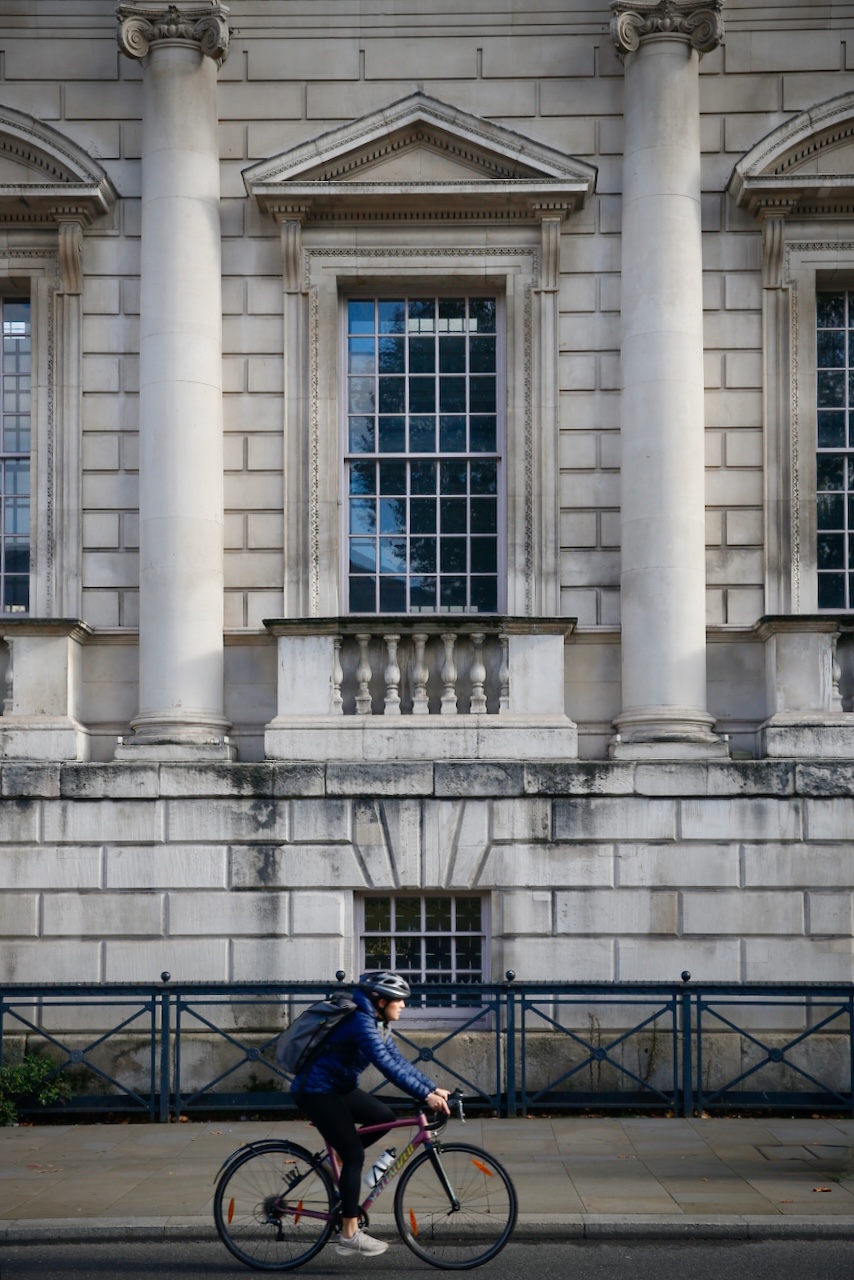
Whitehall remained a royal palace up until 1698 when some random laundry drying after a wash was pushed a bit too close to an open fire and resulted in the entire palace being burnt to the ground. Thats one for the insurers. Only the Banqueting House, a Tudor period wine cellar and Queen Mary’s steps remain. The wine cellar is sadly hard to access, however the steps can be easily seen. On the outside of the Ministry of Defence Building, described as a ‘monument of tiredness’, the steps and part of a terrace built for Queen Mary by Sir Christopher Wren in 1691 can be found, illustrating how far the Thames encroached before the Victorian embankment was built.
I kind of like the way people walk past Banqueting House everyday and not know of its history. Its like a secret. Buses pause in traffic and the passengers stare blankly out, but all they see is a classical grand building, similar with every other building you see here at the geographical heart of British government. To most people it’s just another large grand stone edifice to old power and empire. But it is much more than that, it’s a building that was the backdrop to one of the most significant moments in our past. If walls could speak.
The building is undergoing some extensive renovation works but will be open to the public again soon, when it does, its well worth dropping in and having a look around.
 The London Walker
Leave a comment