
St John’s Gate stands out more than most old buildings in this part of London. It has that look, boosted by its crenellated battlements, that makes people understandably stop and stare. The thing is, it’s not as old as it appears. Although a gatehouse has stood here since around the mid 1100s, the structure we see today is more modern, built in 1504 during the reign of Henry VII, the first monarch of the famous Tudor period. Despite this, the turreted gatehouse, situated at the top of St John’s Lane, exudes an unparalleled history amidst the surrounding Georgian buildings and modern offices.
And it is deserving, this is a fascinating reminder of our medieval past, but also has links with a more modern familiar world, as well as two of our most famous artists.
But first, imagine this: generations of knights from medieval England would form here before going on the Crusades, great war horses, baggage trains and soldiers, trumpets and banners and spears, they would have come crowding down this lane, filled with religious zeal and adventure in their pursuit to reclaim Jerusalem and the Holy Lands.
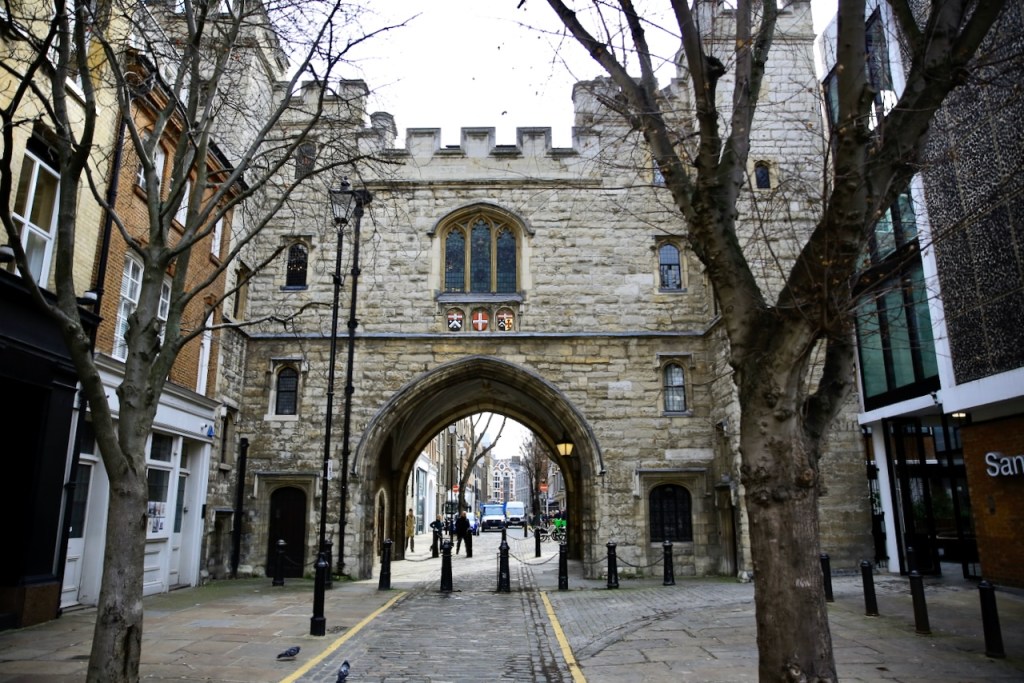
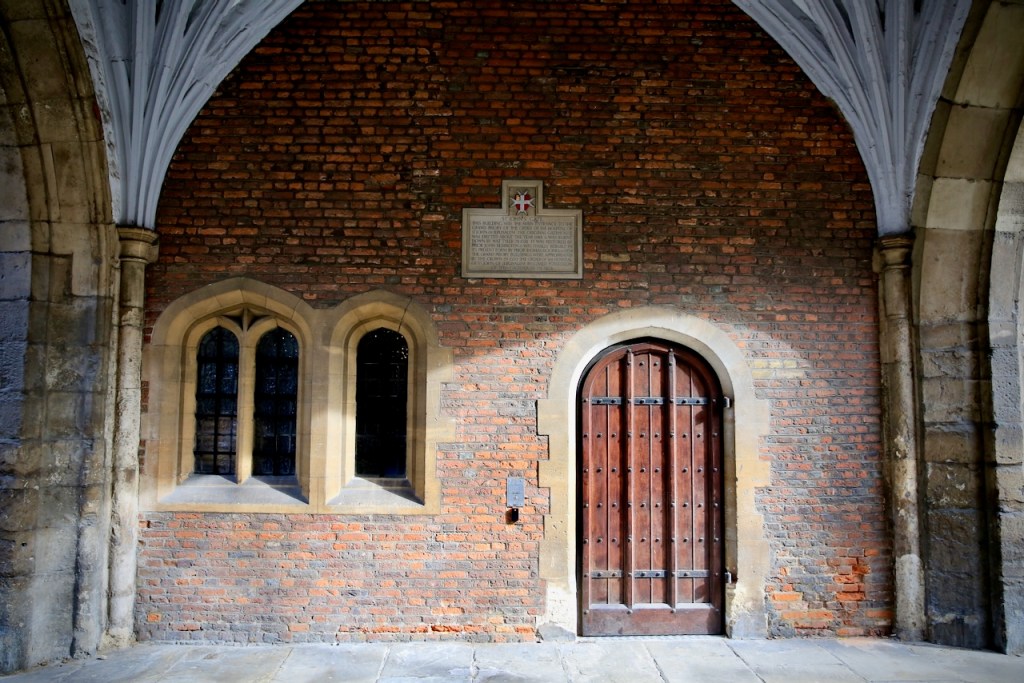

St John’s Gate served as the southern entrance to the Priory of Clerkenwell, the headquarters of the Knights Hospitallers. The Hospitallers, more commonly known as the Knights of St John, were a medieval Catholic military and religious order. Originally established in Jerusalem in 1080 to care for sick and poor pilgrims in the Holy Land, the order evolved into a military force during the Crusades, defending Christian territories and pilgrims. By the early 1100s, the organization had spread across most of Europe. In 1144, a small land grant here in Clerkenwell to Jordan de Bricet led to the founding of the Priory of the Order of St John, establishing the order’s English headquarters.
It became a huge and powerful base, taking over ten acres of land, the grounds included numerous palatial buildings accommodating the knights, including a church and a great hall, there was a fish pond, a windmill, a butcher’s shop and a brewery. Everything was fine, excepting the peasant’s revolt, but thats another story, until Henry VIII and the dissolution of the monasteries. The buildings, land and wealth of this unique religious community were transferred to the crown, everything was sold off and now the only remaining building is the gatehouse.
The gatehouse itself has a fascinating history from this point. Between 1578 and 1607 this building served as the office of the Master of the Revels an influential royal official responsible for overseeing and regulating public entertainment. Basically a censor. At a time when Tudor theatres were thriving, with thousands attending plays weekly, the Master of the Revels held the authority to grant licenses for performances, effectively controlling which theatrical productions were allowed on stage and, by extension, ensuring the material was politically safe for the public. This was a time of heightened state paranoia, there were plots, insurrections and assassinations, the endless power play between protestant and catholic states, and the Master of Revels ensured that social order and the protection of the monarchy was maintained. This brings into light the curious involvement of one of our most famous writers and this wonderful gatehouse.

For most of Shakespeare’s working life, the Master of the Revels, Edmund Tilney was based here. Many of Shakespeare’s most famous plays, including a Comedy of Errors, Hamlet, Romeo and Juliet, A Midsummer Night’s Dream, The Merchant of Venice, Much Ado About Nothing and Macbeth were licensed here for performance. Isn’t it wonderful to consider the image of William Shakespeare and perhaps his long standing friend Richard Burbage trooping up a muddy St John’s Lane laden with a heavy lather satchel filled with the first copy for Twelth Night.
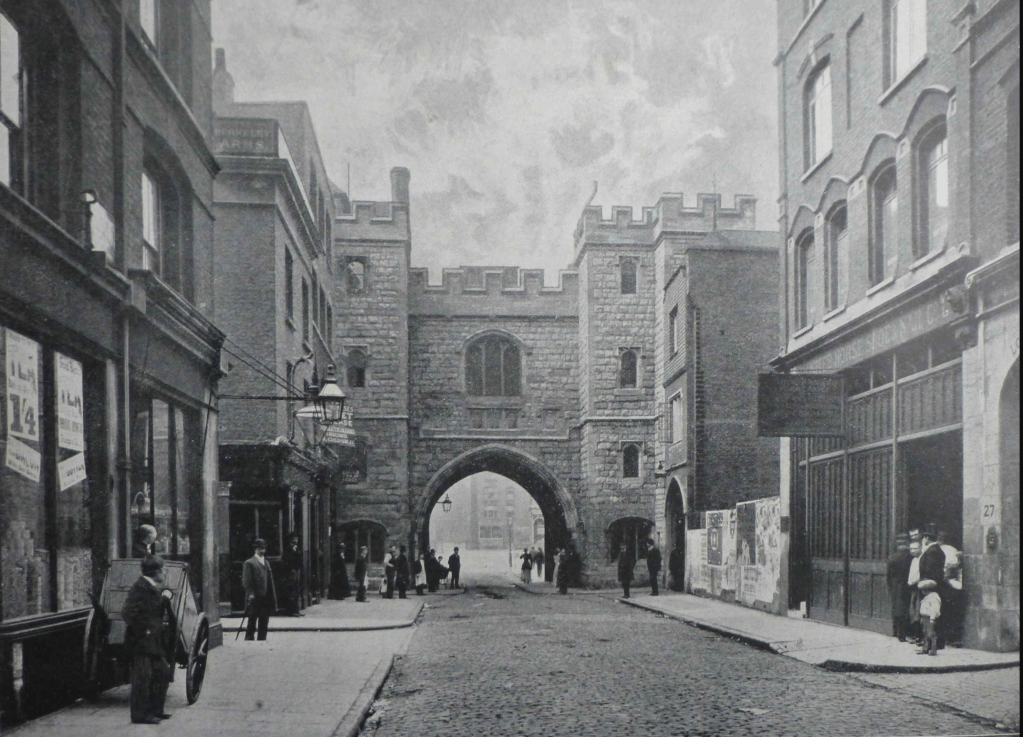
In 1703, Richard Hogarth, father of painter William Hogarth, opened a coffee shop inside the gate and for a few years Hogarth lived here as a young child. He was baptised at the nearby St Bartholomew’s Church. William Hogarth is a fascinating character. Famous as a painter, engraver and satirist, celebrated for his sharp social commentary and wit. He painted a sharp path through Georgian England’s quirks and vices, rising to prominence with his series of narrative stories A Harlot’s Progress, The Rakes Progress and his famous gin-soaked street scenes of Gin Lane. Hogarth’s art humorously and critically addressed themes like class disparity, corruption, and the consequences of moral decay in society. He was an early ‘Private Eye’ and gifts us a fabulously detailed account of London society at the time.
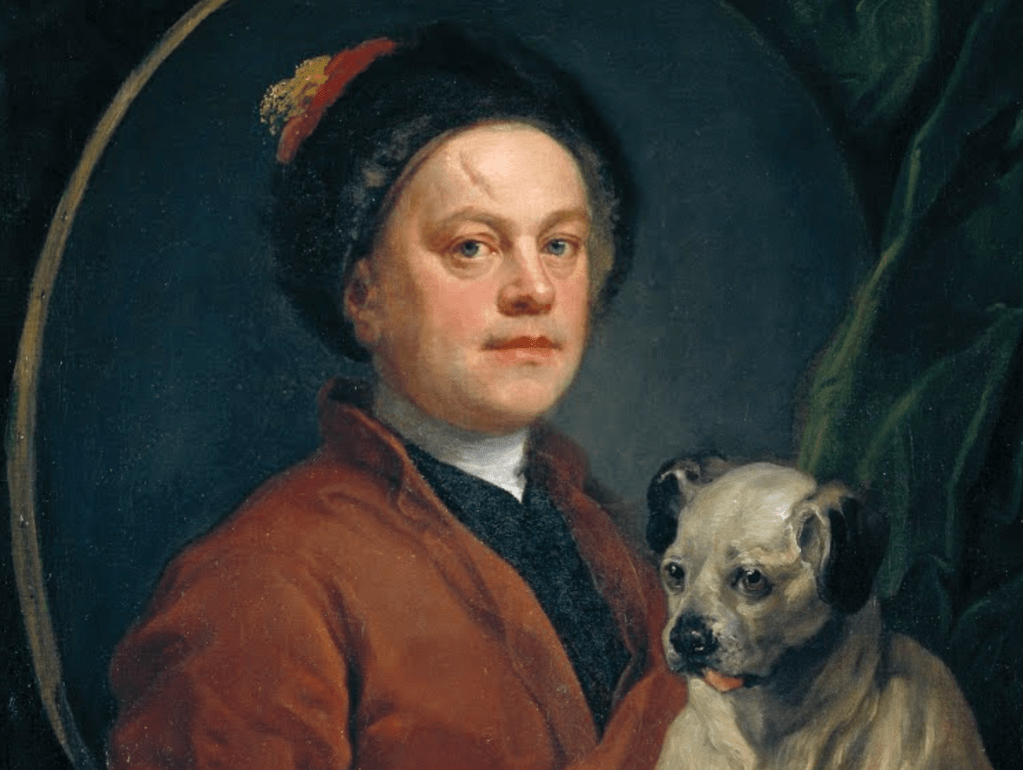
There’s a great Hogarth self-portrait painted in 1745, Painter and His Pug, which depicts him and his pet pug, who brilliantly was named Trump. He was a remarkable portrait painter. If you’re ever near Tate Britain, go in and find the painting Heads of Six of Hogarth’s Servants. On a single canvas, you’ll see these beautiful portraits, a rare depiction of ordinary working Londoners who worked in Hogarth’s household. Each portrait is consummately detailed and expressed, its like you could turn and talk to them, they’re so real, so vivid, so alive.

Astonishingly there is a sketch of the interior of the coffee house at the time Hogarth was living there as a child. I look at it and can’t help but imagine a young William Hogarth sat scribbling and drawing in one corner. Perhaps his dad leaning over in a quiet moment and commenting . “Hey lad, you’re good with that pen let me get you some more paper.”

Make a one-time donation
Your donation helps support this website and share the rich history and culture of London, through a programme of engaging, informative walks and photography and video which celebrate London. Choose an amount, anything helps, thank you.
Your contribution is appreciated.
Donate The London Walker
Leave a comment