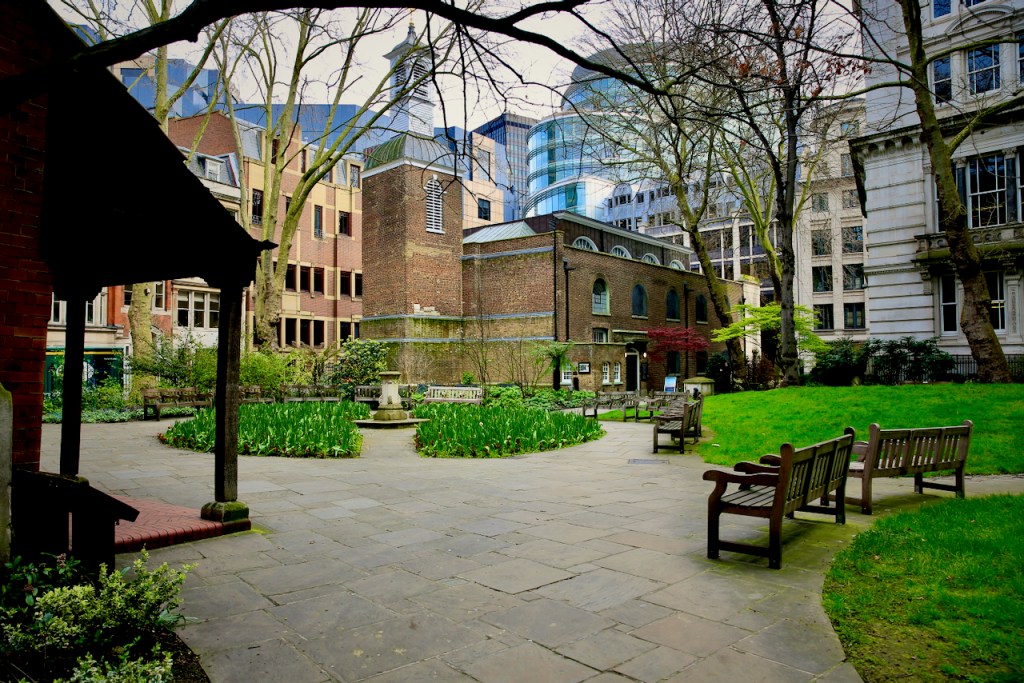
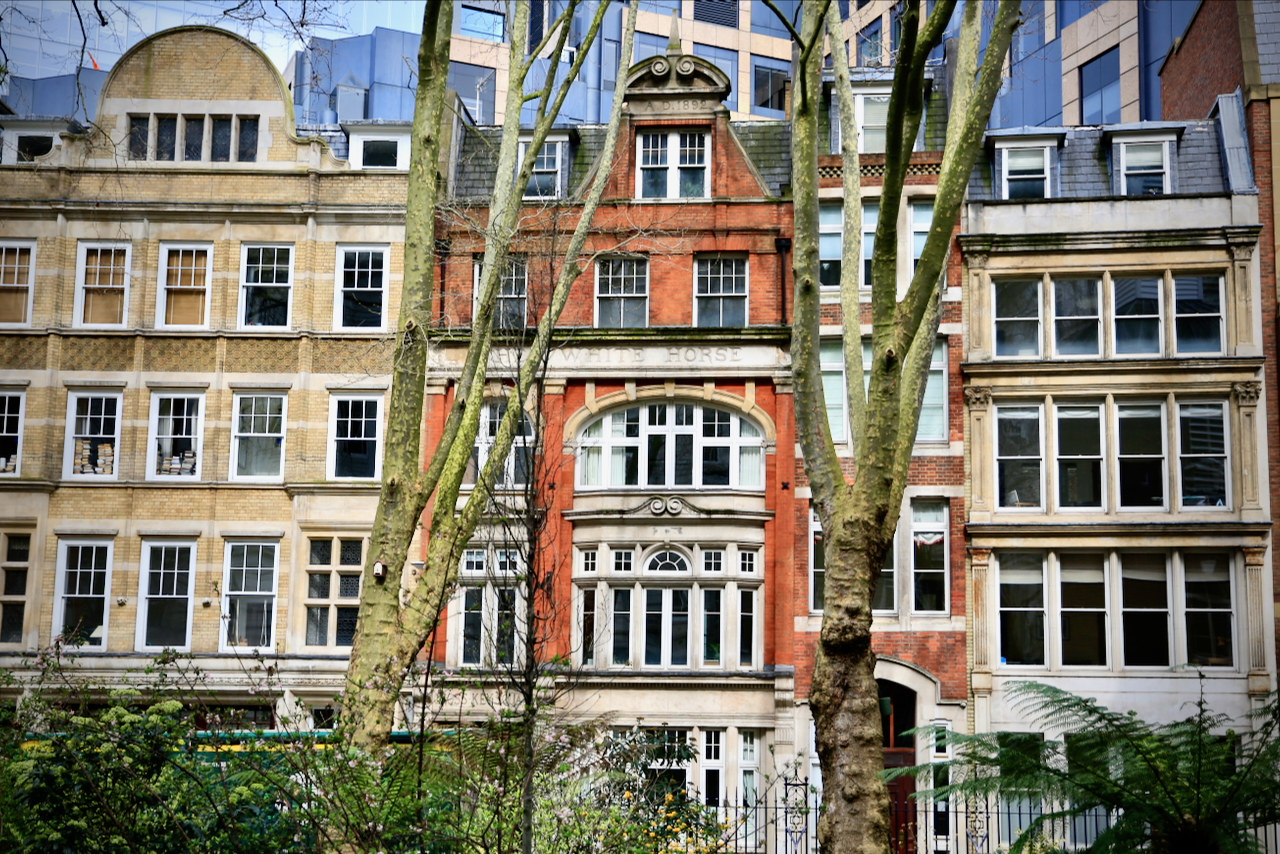
It’s easy to miss, despite having two entrances, two innocuous wrought iron gates set back from the street and half hidden by shrubbery, you’d be forgiven for missing it. Situated between King Edward Street and St Martins le Grand this peaceful space of tranquil greenery is known as Postman’s Park. It’s a beautiful little area with rolling lawns of mown grass and carefully manicured flower beds, there is a raised ornamental fish pond and a generous spread of benches, all of which is surrounded by tall, elegant old plane trees. In the often stifling heat of midsummer Postman’s park is a great place to seek cool refuge. Only a few minutes from the tourist-crowded streets around St Paul’s and the Millennium Bridge its a positive oasis. If I find myself in the area, I’ll often take something cold and fizzy along with a tasty sandwich and sit perched on one of the benches watching the world go by. Postman’s Park is one of nearly two hundred green spaces and gardens in the city, and as you can probably tell, its one of my favourites
Its name comes from the General Post Office building, a grand head quarters, which was once situated here between 1829 and 1912. Postal services, of sorts, had existed in England from around the 1640s, when a public service for the conveyance of letters, newspapers and parcels was first introduced. This would later become the General Post Office. With the advent of penny postage the volume of mail had increased dramatically and by around 1830 this building was processing 400,000 letters a week, by the beginning of 1900s they were processing nearly 20 million letters a week.
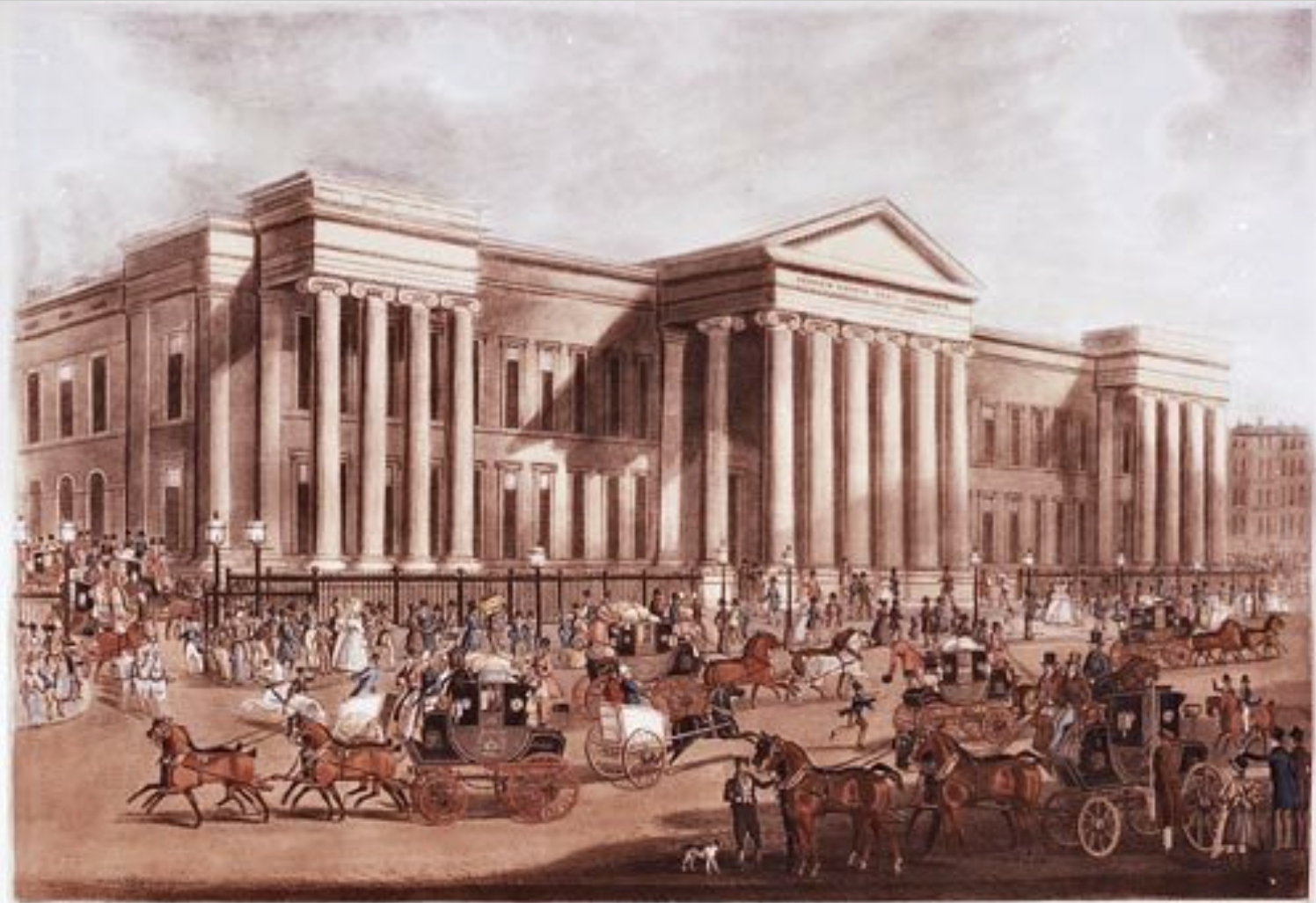
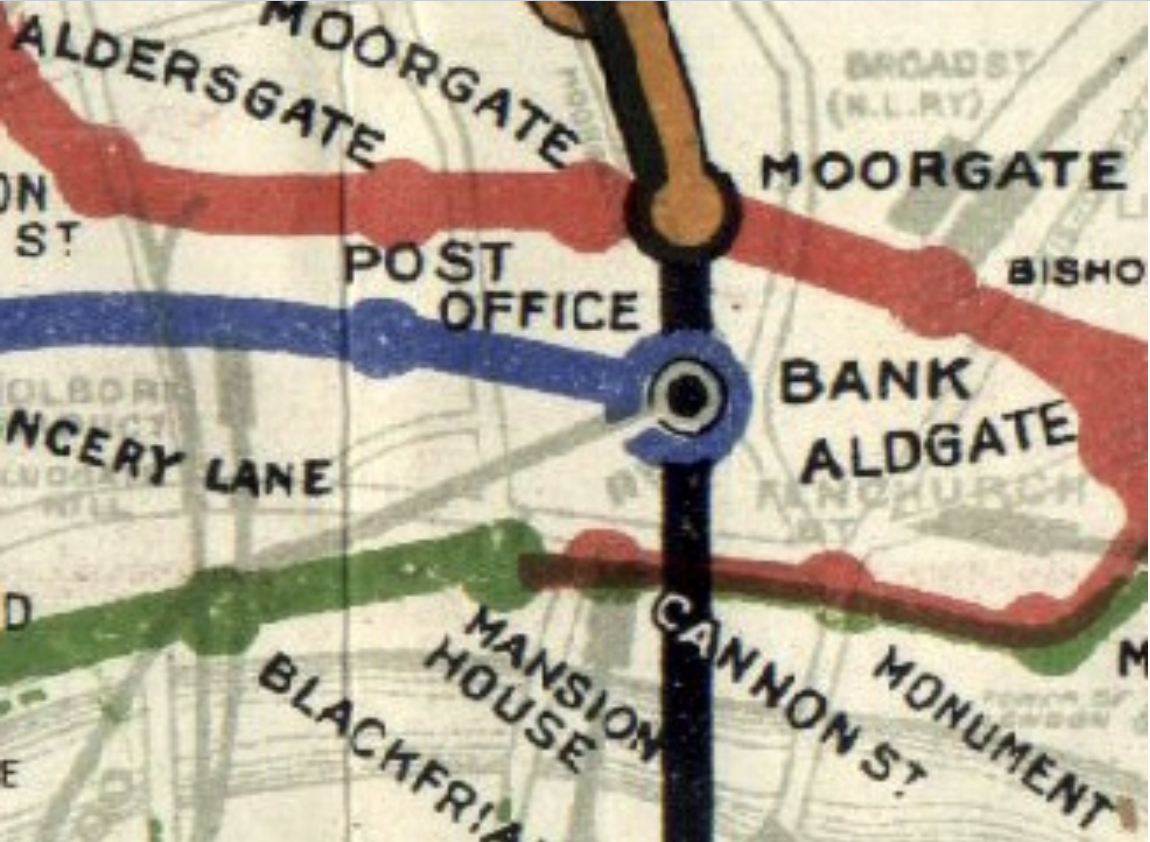
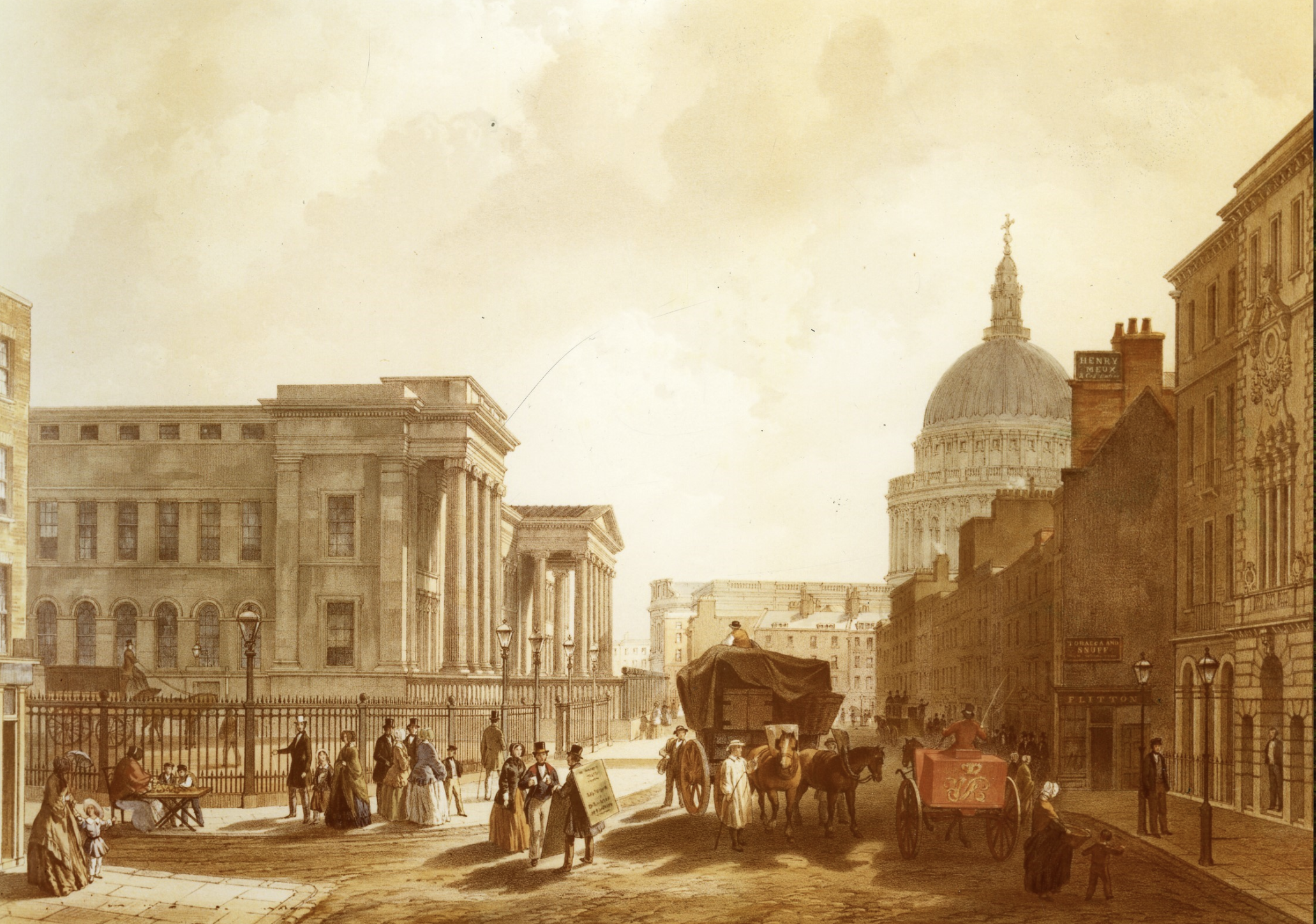
It was a substantial building housing the headquarters and administrative departments, the main sorting rooms as well as a post office in a grand public hall. There was an armoury for the guards. It also held the early telegraph department. So impressive and all encompassing was the site that when Central London Railway (now The Central Line) opened a station here, it was originally called Post Office; now its known as St Paul’s.
Opened on the 28th October 1880 it soon became a popular destination for post office workers, consequently it became known as Postman’s Park. The park, perhaps because it was populated by workers and ‘regular folk’, became the location for an extraordinary and moving memorial for the general public.


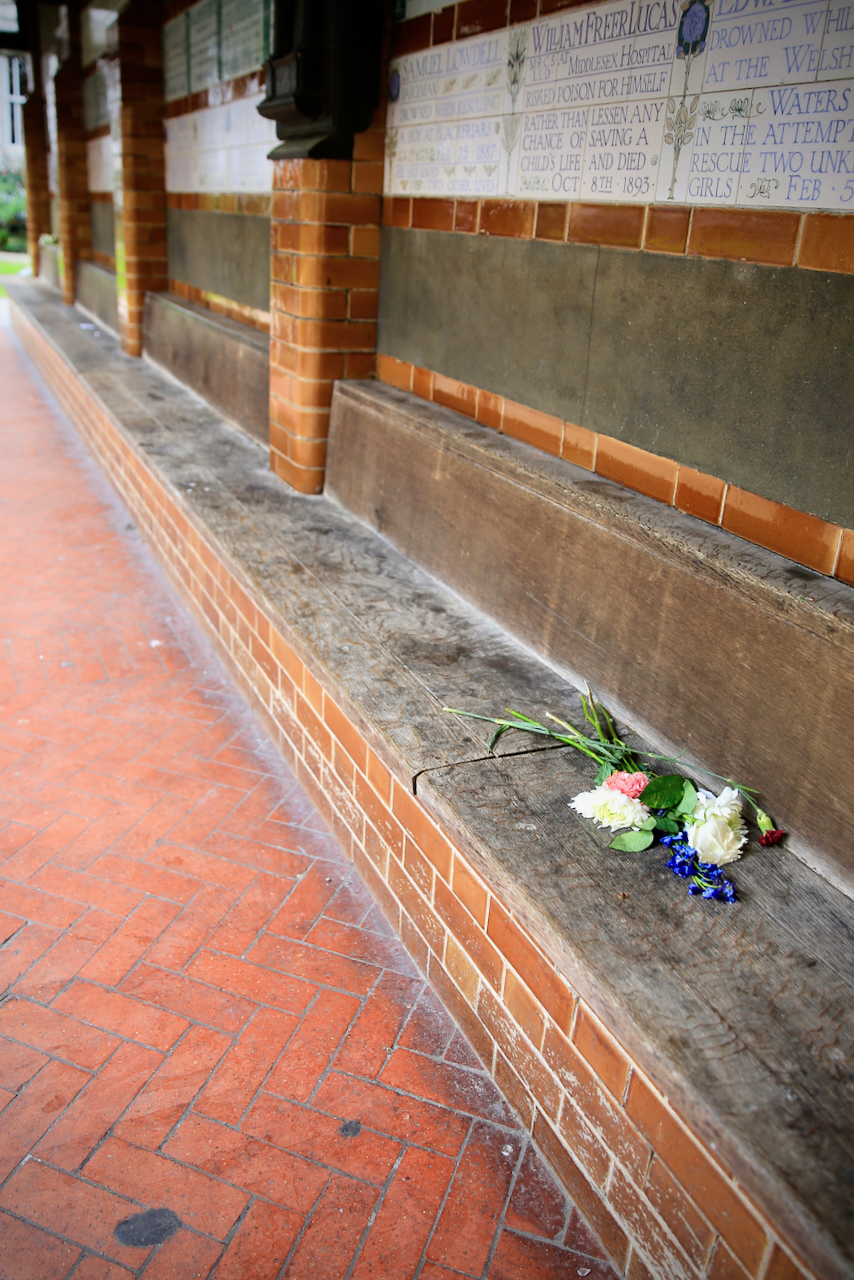
The memorial commemorates sixty two men, women and children who lost their lives whilst attempting to save others. This wonderful little contemplative place was born through the perseverance and imagination of Victorian artist and philanthropist George Frederick Watts who suggested the park as a good location for a memorial commemorating ordinary everyday heroism. It was constructed in 1900 and consists of a long cloister with heavy wooden uprights and a simple bench where flowers are often laid. Along the wall are fifty-four memorial tiles.

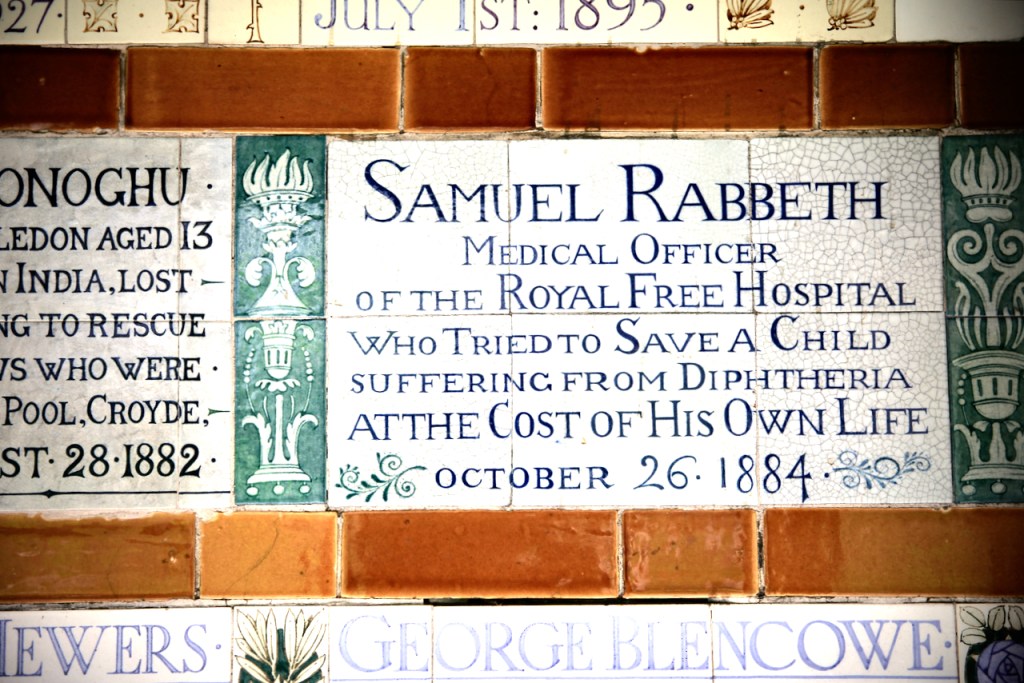
Each tile conveys a poignant story of an individual who paid the ultimate price in their efforts to save others. They cover many acts of selfless bravery and extraordinary courage; the rescuing of people from burning buildings, from drowning in rivers and canals, from industrial accidents, even a shipwreck. The first recorded act of heroism dates back to 1863, and the most recent is from 2009 for a printmaker who jumped into the Thamesmead canal to save a boy from drowning. As you look through the individual stories, its impossible not to be deeply moved by them.
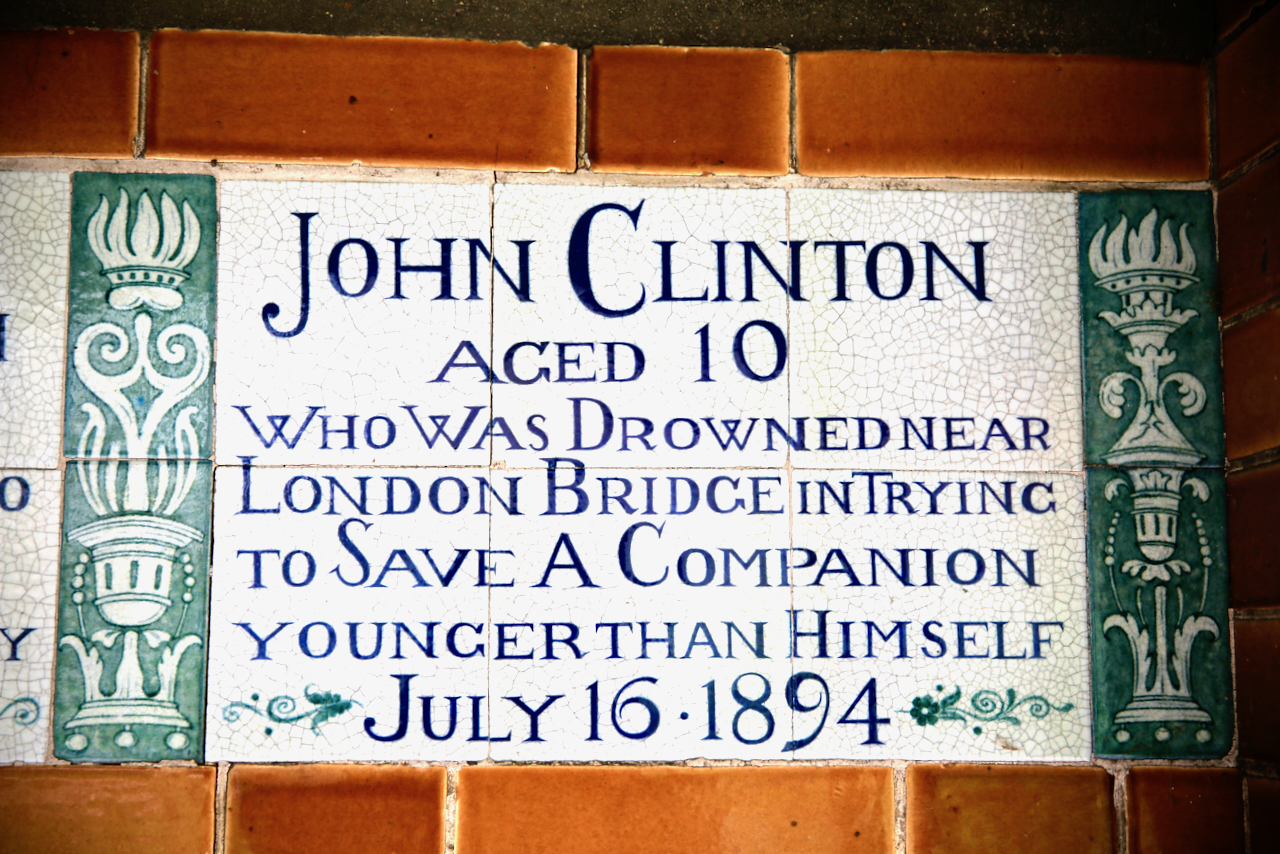

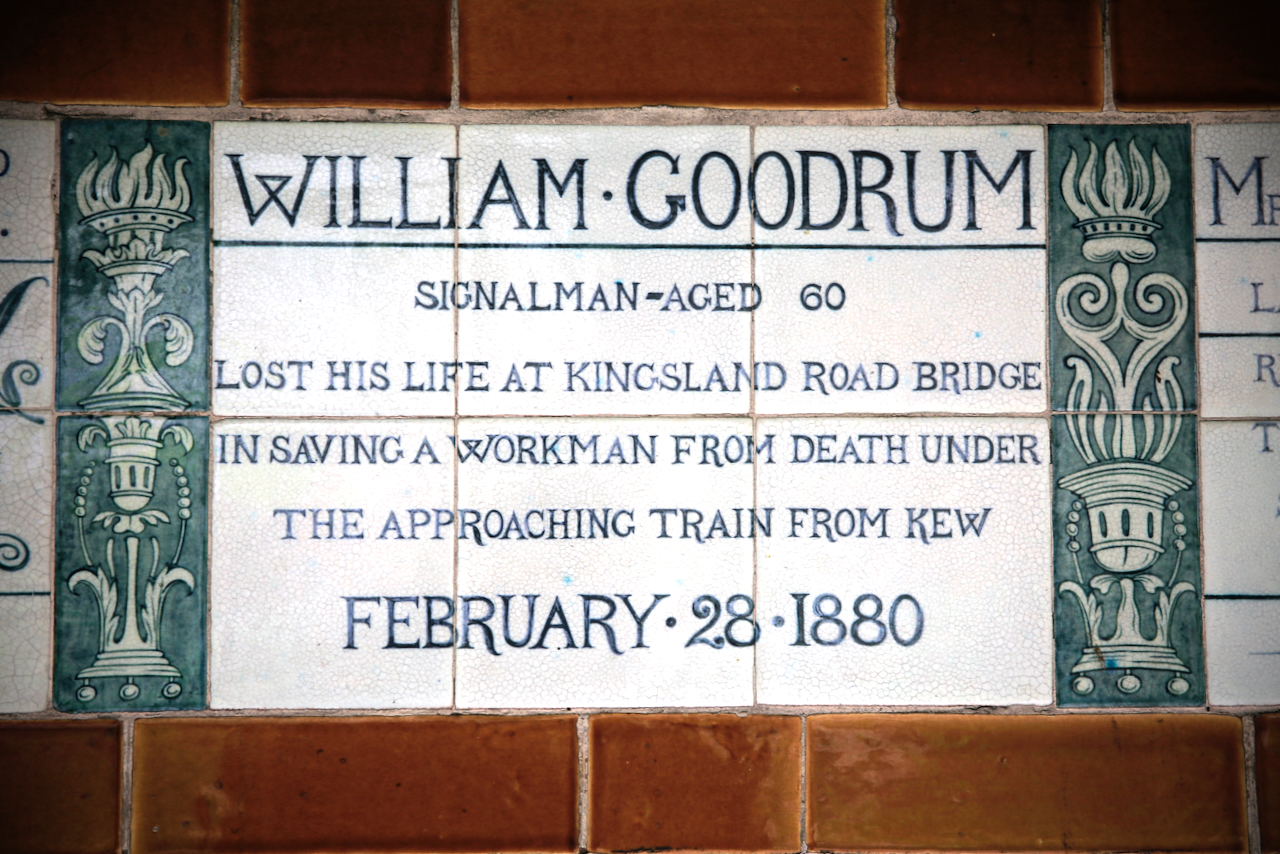

To me this is one of the most poignant and moving dedications in London, unlike other memorials or statues in the city which sometimes contain uncomfortable histories and characters for our modern times, there is something here in Postman’s Park that strikes at a simple extraordinary universality in these acts. Everyday people doing the most astonishingly brave and courageous things, often in these moments of crisis they are helping strangers, reminds you of the deeper richer spirit and kindness in humanity. I firmly recommend visiting this place as its both deeply humbling and also somehow enriching, its renews your sense of people and humanity.
There have been muted plans to instal a more conventional memorial here in the gardens to the victims of the Covid pandemic and to help remember those in the NHS who gave their lives during that time. I couldn’t think of a more apt location.
 The London Walker
Leave a comment